Septic Tank Pumping in Murfreesboro
Septic tank pumping service in Murfreesboro and nearby towns. Learn the warning signs, the process, and how clay soils affect pumping frequency.
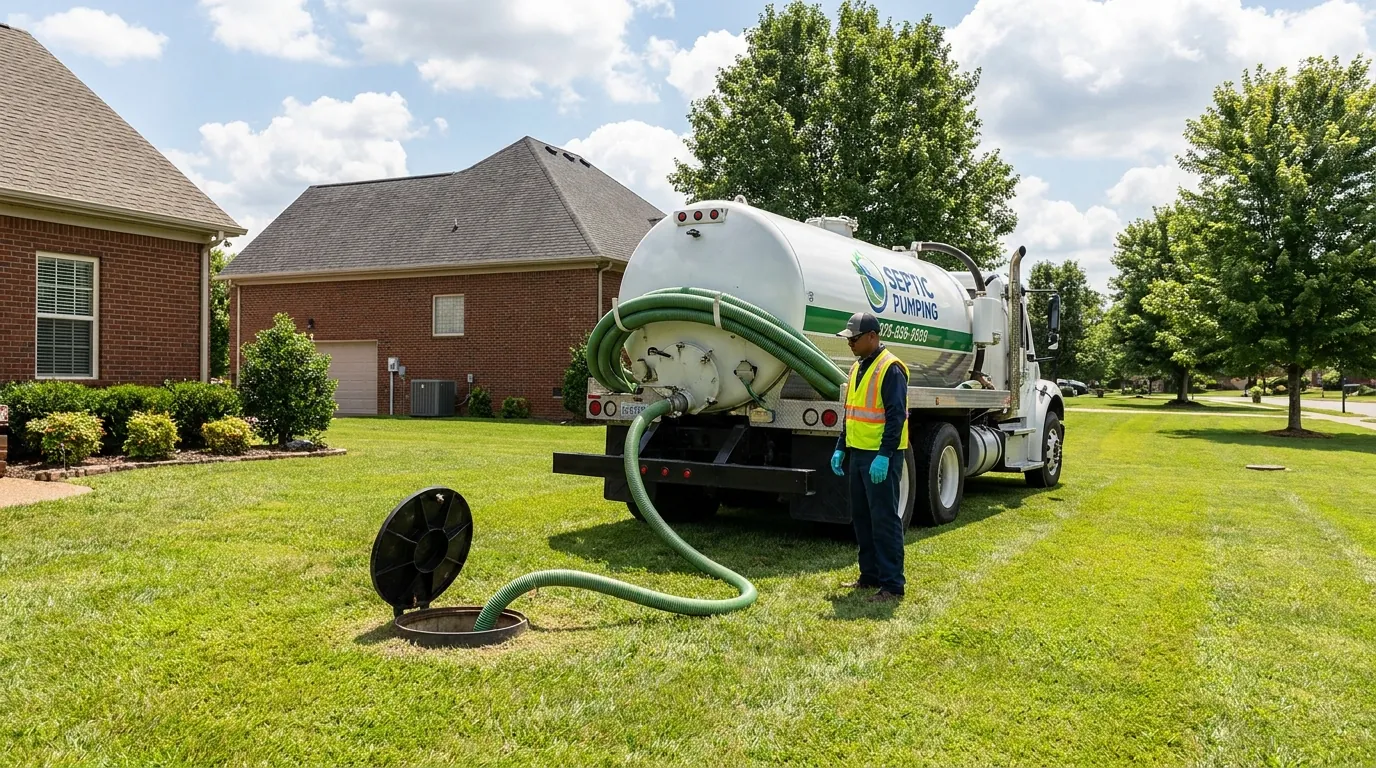
When your Murfreesboro septic tank needs pumping
Every septic tank collects solids that never break down. Heavy sludge sinks to the bottom, a grease and scum layer floats on top, and only the clarified liquid in the middle should ever leave the tank for the drain field. When the sludge and scum layers grow too thick, solids start pushing out toward your drain field — and that is the failure that costs thousands to fix. Routine septic tank pumping is the single cheapest thing you can do to protect the rest of the system.
Homeowners around Murfreesboro usually call for a septic tank pumping service when they notice slow drains throughout the house, gurgling toilets, a sewage smell near the tank or the yard, or unusually green, soggy grass over the drain field. Any one of these can mean the tank is overfull and solids are backing up. If you are seeing several of these signs at once, don't wait — read our guide to the signs your septic tank is full and get on the schedule.
TrueTank Septic provides septic tank pumping in Murfreesboro and the surrounding Rutherford County area. This page explains what the work involves, how local soil and weather change the timing, and how to decide when it's time.
What a septic tank pumping service involves
A proper pumping is more than draining the tank. Here is what the visit looks like.
-
Locate and uncover the access lids
We find the tank and expose the inlet and outlet access ports. Many Murfreesboro homes built before risers were common have lids buried under a foot of clay soil, so this step can take a little digging on older properties.
-
Measure the sludge and scum layers
Before pumping, we check how thick the bottom sludge and top scum layers have grown. This tells us whether your pumping interval is right or whether household use is filling the tank faster than expected.
-
Pump the full tank
We pump both compartments through the access ports, removing liquid, floating scum, and settled sludge. Pumping only the liquid and leaving the sludge behind is a shortcut that defeats the purpose, so the tank is emptied completely.
-
Inspect the tank and baffles
With the tank empty we look at the inlet and outlet baffles or tees, the walls, and the effluent filter if one is fitted. Cracked baffles or a missing filter let solids escape toward the drain field, and we flag anything that needs attention.
-
Backfill and note the next interval
We replace the lids, backfill, and give you a recommended date range for the next pumping based on tank size, household size, and what the sludge measurement showed.
Local soil and weather change your pumping schedule
Rutherford County sits on clay-heavy soils that drain slowly. Clay has poor percolation, which means the drain field is already working hard to absorb effluent even when everything is healthy. When solids escape an overfull tank into that slow-draining soil, they clog the field quickly and permanently. Keeping the tank pumped on time is how you protect a drain field that clay soil makes hard to replace.
Wet winters and humid summers make it worse. During long rainy stretches the water table around Murfreesboro rises and the ground stays saturated, so the drain field cannot accept much new liquid. A tank that is near full going into a wet week has no margin left. Many homeowners here schedule pumping in late summer or early fall, when the ground is driest and the system has the most room to recover.
If you're not sure whether your system is due, a septic system inspection measures the layers and checks the components, and regular septic tank cleaning removes the buildup that pumping alone can leave behind. Contact us to get on the schedule before a small problem becomes a backup.
Frequently asked questions
How often should I pump my septic tank in Murfreesboro?
Most households need pumping every three to five years, but clay soils and heavy seasonal rain here can shorten that. Tank size and the number of people in the home matter most, and measuring the sludge layer during a visit gives the most accurate interval for your system.
What does septic tank pumping cost?
Cost depends on tank size, how much digging is needed to reach the lids, and how heavy the sludge has become. We give a clear price before any work starts. You can read our detailed breakdown of septic tank pumping cost in Murfreesboro in our articles section.
Can I just pump the liquid to save money?
No. Removing only the liquid leaves the sludge and scum behind, which is the exact material that clogs your drain field. A complete pumping empties the whole tank so the system starts fresh.
How do I know if it's an emergency?
Sewage backing up into the house, standing wastewater in the yard, or multiple fixtures failing at once all call for prompt attention. Our septic emergency service handles these situations so you are not living with a backup.
Talk to someone about your job
Call to describe the problem and get a quote for work in Murfreesboro, TN.