Drain Field Service in Murfreesboro
Drain field service in Murfreesboro for soggy yards, odors, and slow drains. Learn the warning signs and how clay soil affects your septic field.
Your drain field and why it matters
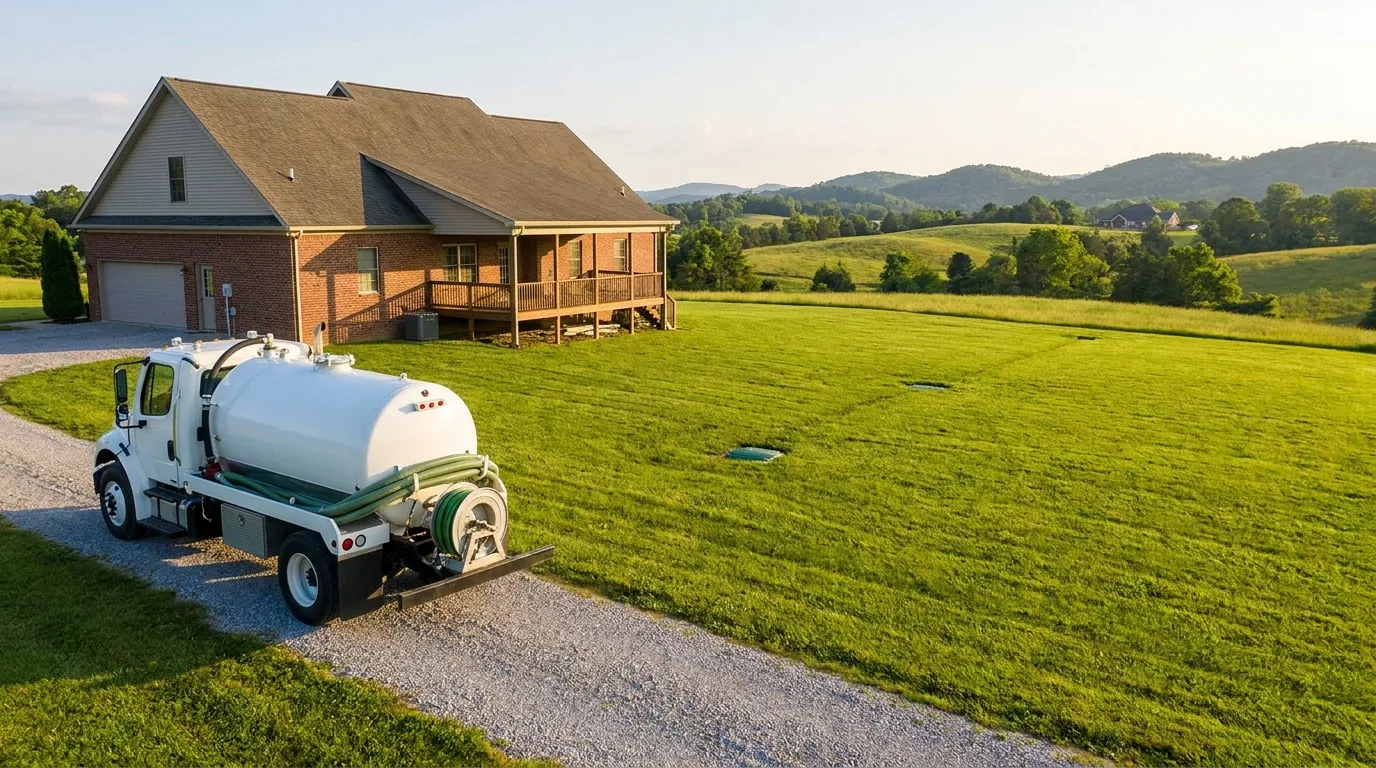
The drain field — also called the leach field or absorption field — is where treated liquid from your tank soaks into the soil. It's a network of perforated pipes in gravel-filled trenches, and it depends entirely on the surrounding ground being able to accept water. When the field fails, effluent has nowhere to go, and the result is standing water, odors, and eventually backups indoors. Replacing a field is the most expensive repair a septic system can face, so caring for it early pays off.
Warning signs of a struggling drain field include bright green, fast-growing grass over the trenches, spongy or wet ground when there hasn't been rain, sewage odor outdoors, and drains throughout the house that slow down together. Because so many of these signs point back to an overfull tank, the first step is usually to rule that out with septic tank pumping and a look at the tank's condition.
TrueTank Septic evaluates and services drain fields in Murfreesboro and the surrounding area, focusing on finding the real cause before recommending any major work.
What drain field service involves
The goal is to find why the field isn't absorbing and address it at the source.
-
Confirm the tank isn't the cause
A tank overdue for pumping sends solids into the field and mimics field failure. We check and, if needed, pump the tank first — sometimes that alone restores normal function and no field work is needed.
-
Inspect the distribution and pipes
We check the distribution box and outlet lines for blockage, root intrusion, and uneven flow that overloads one part of the field while starving another.
-
Evaluate soil absorption
We assess how well the ground is accepting water, looking at surface conditions, recent weather, and whether the field is saturated from a high water table rather than truly failed.
-
Recommend the least-invasive fix
Depending on findings, that might be reducing the load, clearing a blockage, resting the field, or planning larger corrective work. We explain the options plainly so you can weigh cost against the field's remaining life.
Clay soil and wet weather in Rutherford County
The clay soils common around Murfreesboro are the central challenge for any drain field. Clay percolates slowly, so fields here are sized and stressed differently than fields in sandy ground. When the soil pores clog with fine solids or a biomat builds up too thick, a clay field loses its already-limited ability to absorb — and it recovers slowly. This is exactly why keeping solids in the tank, through regular septic tank cleaning, protects the field so effectively.
Wet winters make the difference between a healthy field and a failing one obvious. During long rainy periods the water table rises and the ground stays saturated, leaving no room for effluent to soak away. A field that looks fine in dry August can surface water in February. When we evaluate a field, recent rainfall and the season matter as much as the field itself, because a saturated field and a failed field look similar but need very different responses.
If you're seeing wet ground or odors over your field, contact us for an evaluation. A septic system inspection is often the best starting point to see the whole picture before any digging.
Frequently asked questions
Can a soggy yard just be from rain?
Sometimes, yes. In Murfreesboro's wet winters a saturated water table can make a healthy field look like a failing one. We factor in recent weather and the season, because a temporarily flooded field needs rest, not replacement.
Will pumping the tank fix my drain field?
If the problem is an overfull tank pushing solids into the field, pumping can restore normal function. If the field's soil has already clogged, pumping relieves the immediate load but the field itself may need further work. We check before assuming either.
How can I make my drain field last longer?
Keep the tank pumped on schedule so solids never reach the field, avoid parking or building over it, keep roof and surface water diverted away, and don't overload it with excessive water use. In clay soil these habits matter even more.
What causes a drain field to fail in this area?
The most common causes here are an unmaintained tank sending solids into the field, a thick biomat clogging clay soil, and chronic saturation from high water tables during wet seasons. Often more than one factor is at play.
Talk to someone about your job
Call to describe the problem and get a quote for work in Murfreesboro, TN.