Septic System Inspection in Murfreesboro
Septic system inspection in Murfreesboro. Find leaks, failing baffles, and drain field trouble early. Learn what an inspection covers and when to book one.
Why get a septic system inspection
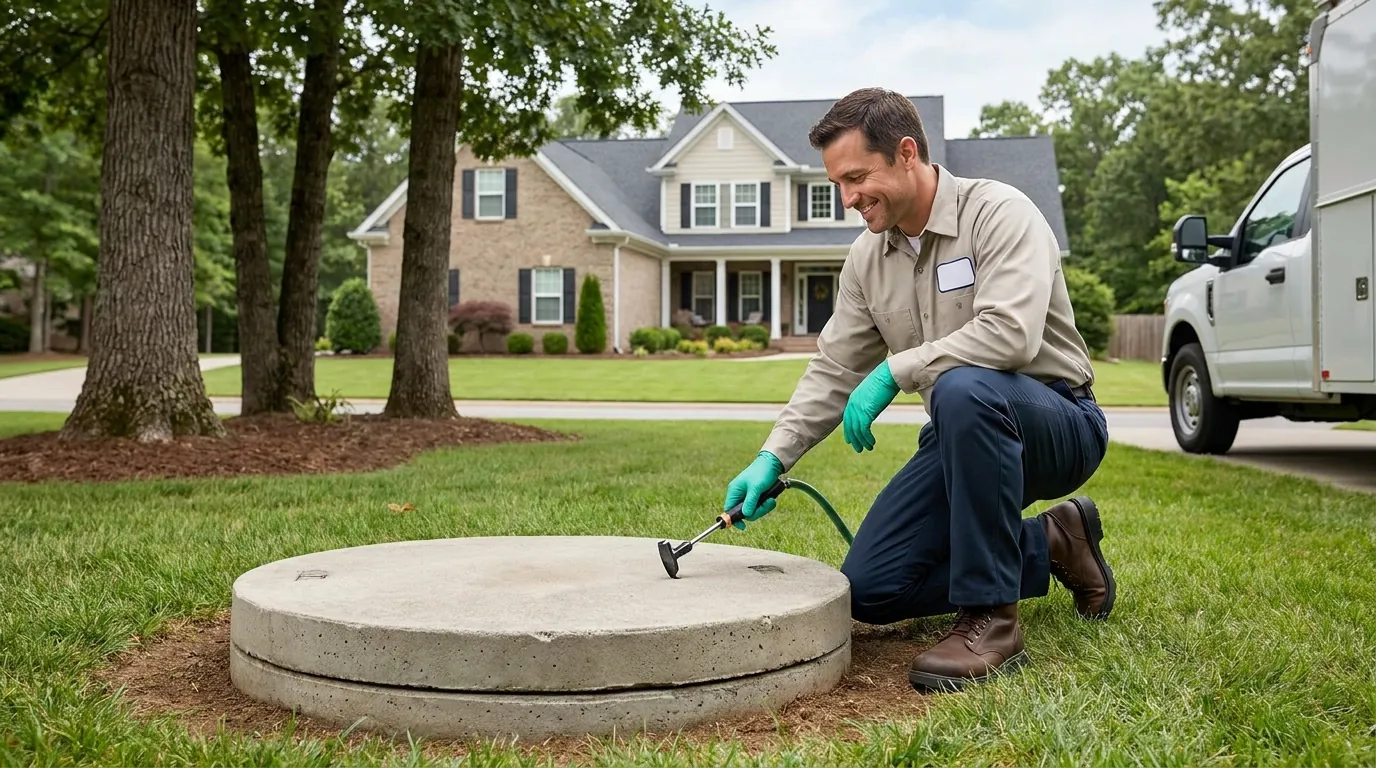
A septic system hides almost entirely underground, so problems build for years before they show up at the surface. By the time you see soggy ground or a backup, the damage is often done. An inspection is how you learn the condition of the tank, the baffles, the effluent filter, and the drain field while you still have cheap options — and it's the difference between a routine fix and a full septic system repair.
People around Murfreesboro book an inspection for several reasons: they are buying or selling a home and need to know the system works, they have never had the system checked and don't know its age, or they've noticed early warning signs like slow drains, faint odors, or grass that grows greener over one part of the yard. Whatever the reason, the goal is the same — an honest picture of what you have and what it needs.
If an inspection turns up a tank that is overdue, the next step is usually septic tank pumping so we can see the empty tank clearly and measure the layers.
What we check during an inspection
A thorough inspection covers the whole system, not just the tank lid.
-
Tank condition and levels
We locate the tank, measure the sludge and scum layers, and check the liquid level. A level that is too high or too low points to a specific problem — an overfull tank versus a leaking tank or a blocked outlet.
-
Baffles, tees, and effluent filter
The inlet and outlet baffles keep scum in the tank and out of the drain field. We check them for cracks and blockage, and we clean or note the effluent filter if one is present. Failed baffles are a common cause of drain field damage.
-
Drain field evaluation
We walk the drain field looking for standing water, spongy ground, odor, and lush growth that signals effluent surfacing. In Murfreesboro's clay soils, a struggling field shows itself at the surface faster than in sandy ground.
-
Structural and flow check
We look at the tank walls and lids for cracks and root intrusion, and where appropriate we run water to confirm the system accepts flow. This distinguishes a full tank from a component failure or a repair need.
-
Written findings
You get a plain summary of the system's condition, anything that needs attention now, and a realistic timeline for the rest — so you can plan instead of reacting to a failure.
How local conditions shape what we find
The clay soils across Rutherford County drain slowly, so drain fields here operate closer to their limit than fields in loose, sandy ground. That makes early inspection valuable: a field that is beginning to fail gives less warning and recovers more slowly. Catching a failing baffle or an overdue tank before solids reach the field can be the difference between a minor septic tank repair and replacing the entire drain field.
Seasonal water is the other factor. During Murfreesboro's wet winters and heavy spring rains, the water table rises and saturated soil pushes water back toward the field. An inspection done during a wet stretch can reveal how the system behaves under real load — sometimes the most useful time to look. If the ground is soggy over the field after rain, that observation belongs in the record.
If the inspection points to buildup rather than a broken part, septic tank cleaning restores capacity, and drain field service addresses the absorption problems clay soil makes common. Contact us to schedule an inspection.
Frequently asked questions
How is an inspection different from pumping?
Pumping empties the tank; an inspection evaluates the condition of the whole system. Often we inspect while the tank is empty from a pumping, because that is when the baffles and walls are easiest to see clearly.
Do I need an inspection when buying a home?
It is strongly recommended. A home's septic system can be near the end of its life with no obvious signs, and a drain field replacement is one of the more expensive repairs a property can need. An inspection tells you what you are actually buying.
Can an inspection tell me if I need septic system repair?
Yes. We identify cracked baffles, leaking tanks, blocked outlets, and failing drain fields, and we explain which need attention now versus what can be monitored. You get a clear picture before committing to any repair work.
How long does an inspection take?
A standard inspection usually takes an hour or two depending on how easily the tank can be located and accessed. Older properties where the lids are buried under clay can take a bit longer to open up.
Talk to someone about your job
Call to describe the problem and get a quote for work in Murfreesboro, TN.