Grease Trap Pumping in Murfreesboro
Grease trap pumping for Murfreesboro restaurants and kitchens. Keep lines clear, avoid backups, and stay ahead of grease buildup. Learn the process.
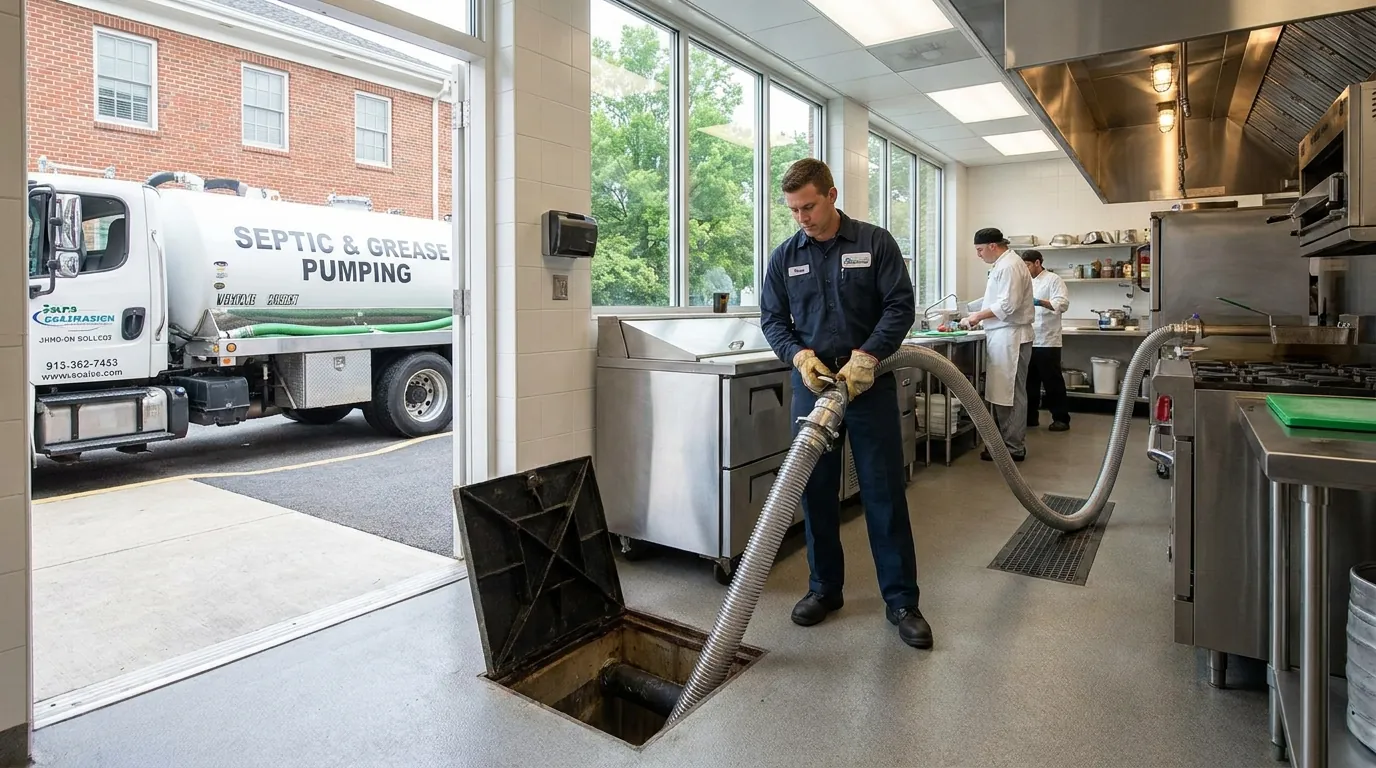
Why grease traps need regular pumping
Any kitchen that produces fats, oils, and grease relies on a grease trap or interceptor to catch that material before it reaches the plumbing and the septic or sewer system. Grease cools, hardens, and sticks — inside the trap and inside your pipes — so a trap that isn't pumped on schedule stops working and lets grease escape downstream, where it causes slow drains, foul odors, and eventually a full blockage during your busiest service.
Restaurants, cafes, and other food-service kitchens around Murfreesboro depend on the trap staying below capacity. Once the accumulated grease and solids fill too much of the trap, wastewater no longer has time to separate, and grease flows straight through. The warning signs — lingering kitchen odors, slow floor and sink drains, and gurgling — usually appear only after the trap is well past due.
For properties on septic rather than sewer, keeping the trap serviced also protects the tank and field. Grease that escapes into a septic tank thickens the scum layer fast and can carry over toward the drain field, which is why grease trap service and regular septic tank pumping go hand in hand.
How grease trap pumping works
A complete service empties and inspects the trap so it works until the next scheduled visit.
-
Open and assess the trap
We open the trap or interceptor and check how full the grease cap and solids layers have grown. This tells us whether your service interval matches your kitchen's actual output.
-
Pump out grease and solids
We remove the full contents — the hardened grease layer on top, the wastewater, and the food solids settled on the bottom. A partial skim of only the top grease is not a real service.
-
Scrape and clean the interior
We scrape the walls, baffles, and inlet and outlet fittings where grease clings, so the trap regains its full working volume and the baffles keep separating properly.
-
Check fittings and close up
We confirm the baffles and covers are sound, note anything that needs repair, and seal the trap back up. We'll suggest a service interval based on what the trap looked like.
Local conditions and scheduling
Grease behaves differently with temperature. In Murfreesboro's humid summers, grease stays softer and flows farther before it sets, which can spread buildup deeper into the lines. In cooler months it hardens closer to the source and clogs the trap and nearby pipes more stubbornly. A consistent pumping schedule matters year-round because you can't count on the weather to keep grease moving.
The right interval depends entirely on your kitchen's volume — a busy full-service restaurant fills a trap far faster than a small cafe. Rather than guessing, we base the schedule on how full your trap actually is at each visit and adjust as your business changes.
If your property runs on a septic system, pairing grease trap service with a septic system inspection keeps the whole system healthy. Contact us to set up a service schedule that fits your kitchen.
Frequently asked questions
How often should a grease trap be pumped?
It depends on kitchen volume and trap size. A common guideline is to service when the combined grease and solids reach about a quarter of the trap's depth. We measure at each visit and recommend an interval that keeps you ahead of that point.
What happens if I skip grease trap service?
Grease escapes the trap and coats the downstream pipes, leading to slow drains, odors, and eventually a blockage that can shut down your kitchen. On septic systems it also overloads the tank's scum layer and threatens the drain field.
Do you pump the whole trap or just skim it?
We pump the entire trap — the grease cap, the wastewater, and the settled solids — then scrape the interior. Skimming only the top grease leaves the trap unable to separate properly and shortens the time until the next problem.
Can grease additives replace pumping?
No. Enzyme or bacterial additives may loosen some grease but they don't remove the accumulated material, and loosened grease can simply move downstream into your pipes. Physical pumping and cleaning is the only way to reset the trap.
Talk to someone about your job
Call to describe the problem and get a quote for work in Murfreesboro, TN.